 GOV
GOV
City Hall Art Inspires Action for Monarch Butterfly Conservation
Maryville University and the City of St. Louis partnered to install educational murals celebrating pollinators and environmental stewardship.


By Aubree Herzog, Washington University Gephardt Institute for Civic and Community Engagement, 2026 St. Louis Fellow
The City of St. Louis Forestry Division recently showcased murals in front of City Hall to spread awareness about monarch butterfly conservation. Three murals, displayed on banners, are educating citizens on the importance of pollinators, monarch butterflies, and conservation.
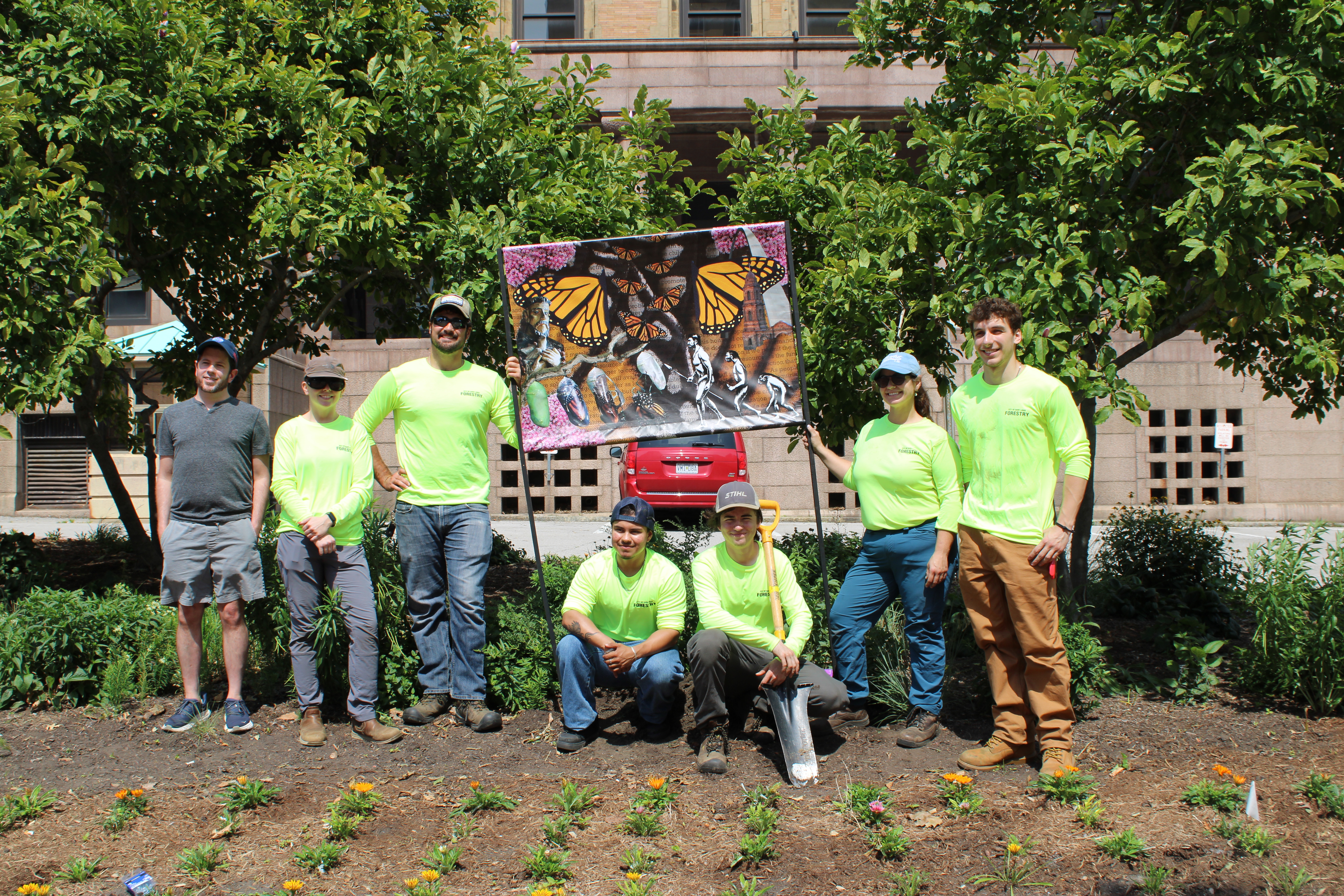
From left: Vaughn Anderson, Associate Professor, Maryville University, Elizabeth Dasenbrock, Project Coordinator/Nature Steward, and other City of St. Louis Department of Forestry staff members pose with the newly introduced murals.
The thirteen-student class from Maryville University created the murals to continue promoting monarch butterfly conservation alongside the city’s other sustainability initiatives. Elizabeth Dasenbrok, Project Coordinator/Nature Steward with the City of St. Louis Forestry Division, worked with the class to have them displayed in front of City Hall.
Monarchs hold an important role in St. Louis as pollinators and the city is on their transnational migration path. Their population numbers have dwindled since the 1980s, so projects like this reinforce their importance to the region’s overall environmental health.
The class, Nature and Humanity, taught by Vaughn Anderson, Associate Professor, looks at how cultures shape the natural world. Through poetry, literature, books, and environmental art, they are able to explore this intersection across time. The three murals highlight different conservation philosophies the students learned about. The philosophies depicted are anthropocentric, eco-centric, and social ecology. All of them focusing on different ways humans and nature interact.
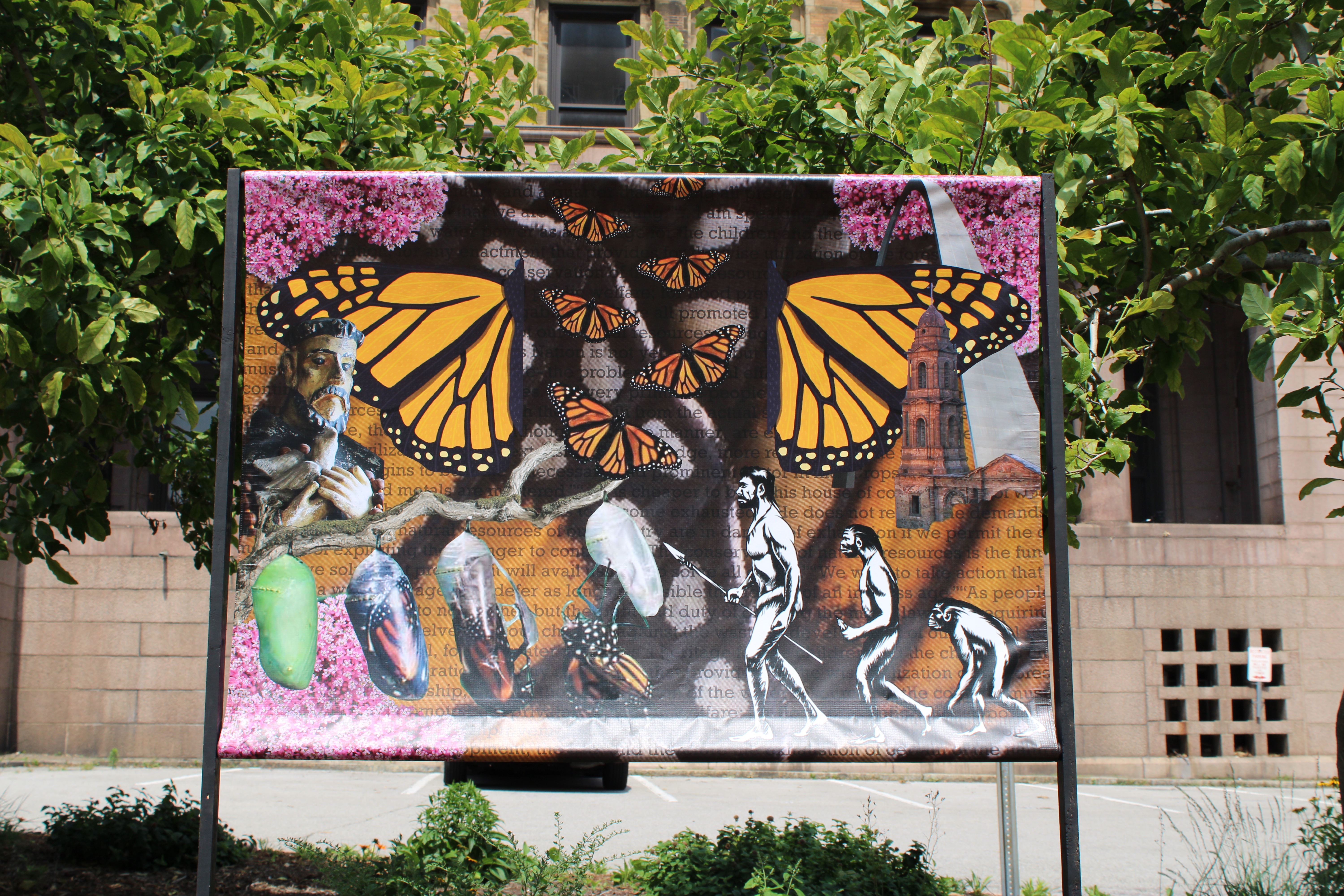
“Monarchs and Mankind” Mural
The first mural, “Monarchs and Mankind” depicts anthropocentric values, and how humans benefit from monarch butterflies. It showcases how they improve human economy, stability, and natural biodiversity, ultimately gaining from strong ecosystems and pollinator networks.
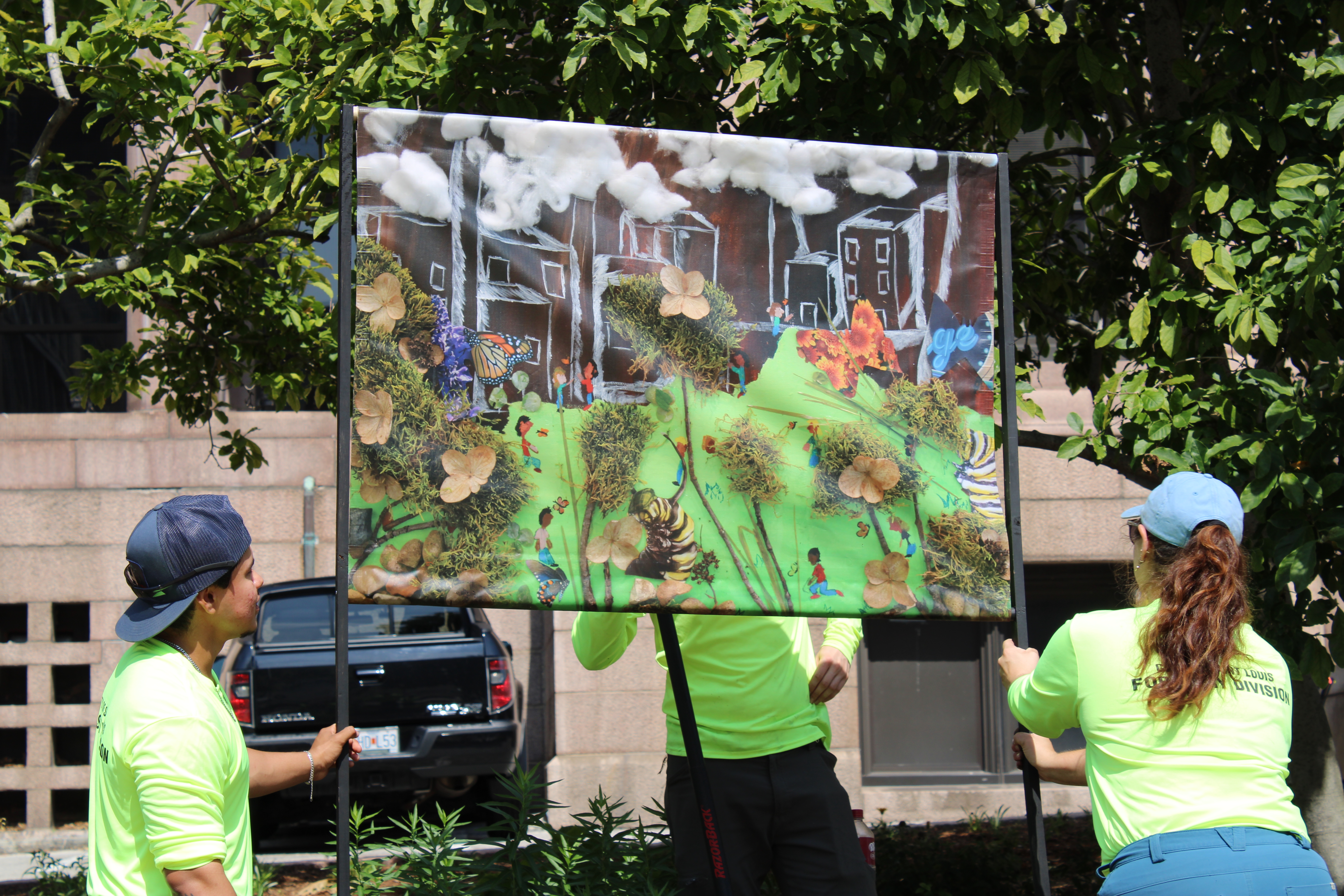
“Where Monarchs Reclaim the City” mural being put up by Forestry Department Employees
The second mural, “Where Monarchs Reclaim the City” reflects eco-centric values. This mural imagines what a world that prioritizes nature first looks like. Through using natural materials to create the mural, it shows harmony and what preservation could look like. A main focus of the piece is recognizing nature's value separate from its benefit to humans.
“One of the major pushes in the program is independent murals that are related to modern conservation, so you can find some of these murals all the way from Mexico to Canada,” said Professor Anderson on how the murals are a part of a larger project with the National Wildlife Federation.
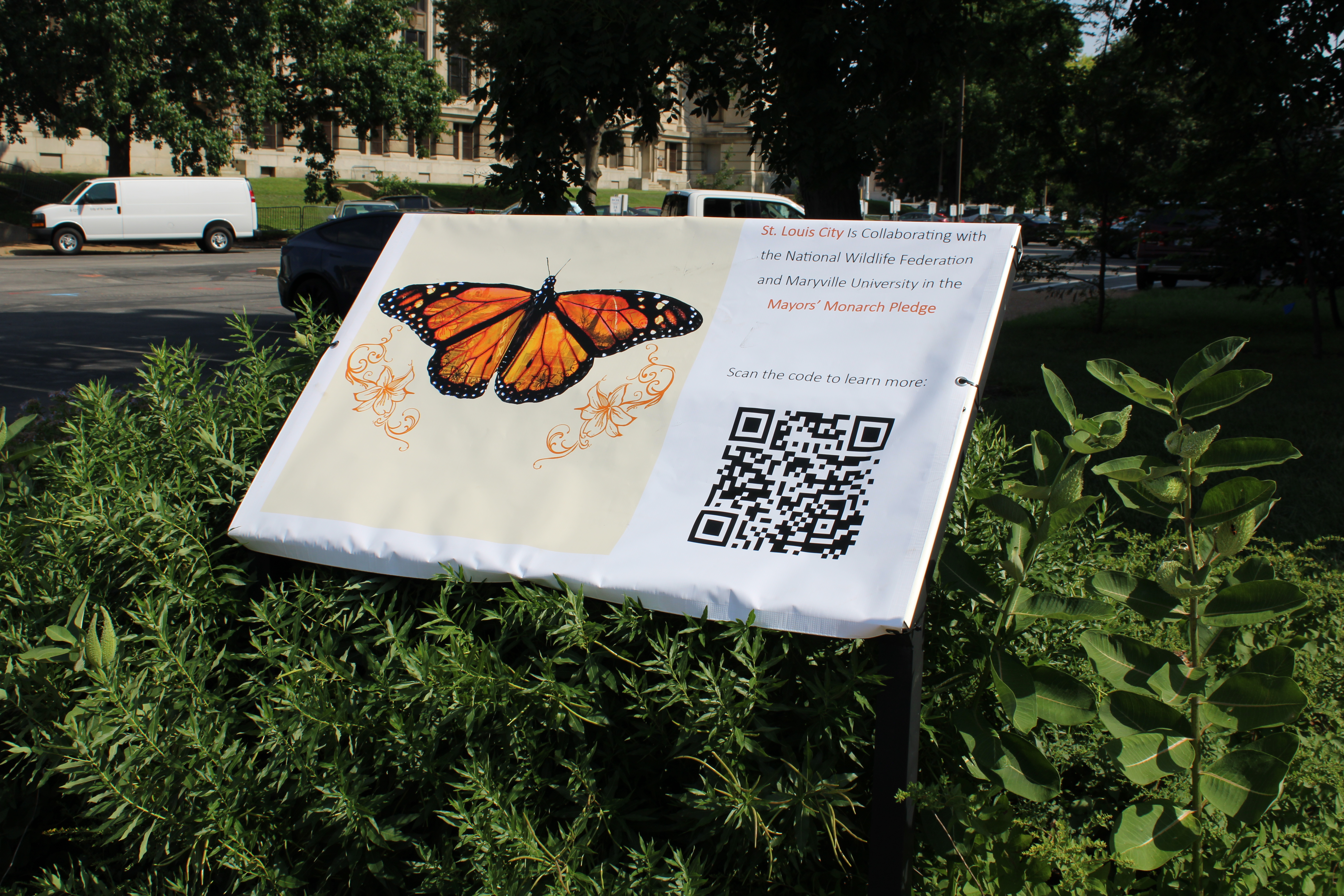
“STL Monarchs Rebirth” Mural with QR Code about Project
The last mural, “STL Monarchs Rebirth” illustrates social ecology. It paints a picture of human and nature unifying in the city, and moving past methods that destroy monarch habitats. It reinforces that our relationship to nature is mutually beneficial and should be cared for. It also features a QR Code that links to more about the project and the meaning behind the murals.
Improving Pollinators’ Habitat
The City’s Planning and Urban Design Agency (PDA) alongside the Green City Coalition (GCC) has been looking at stormwater solutions, and ways to increase the amount of native species in the region.
“The urban environment is kind of a different beast. One third of Missouri was once covered in prairie, and that included the entirety of St. Louis. Trying to put it back is a whole other story,” said Dasenbrock on the struggles of conservation and sustainability work.
“Native species are a lot more resilient for sure. They can also endure harsh conditions with no water for long periods of time,” Dasenbrock said about how native species improve the environment and can handle weather conditions with more ease. “Native species are very adaptable to our changing weather patterns in this region. They've evolved with this area for 1000s of years, and they'll hopefully be around for a lot more time than that.”
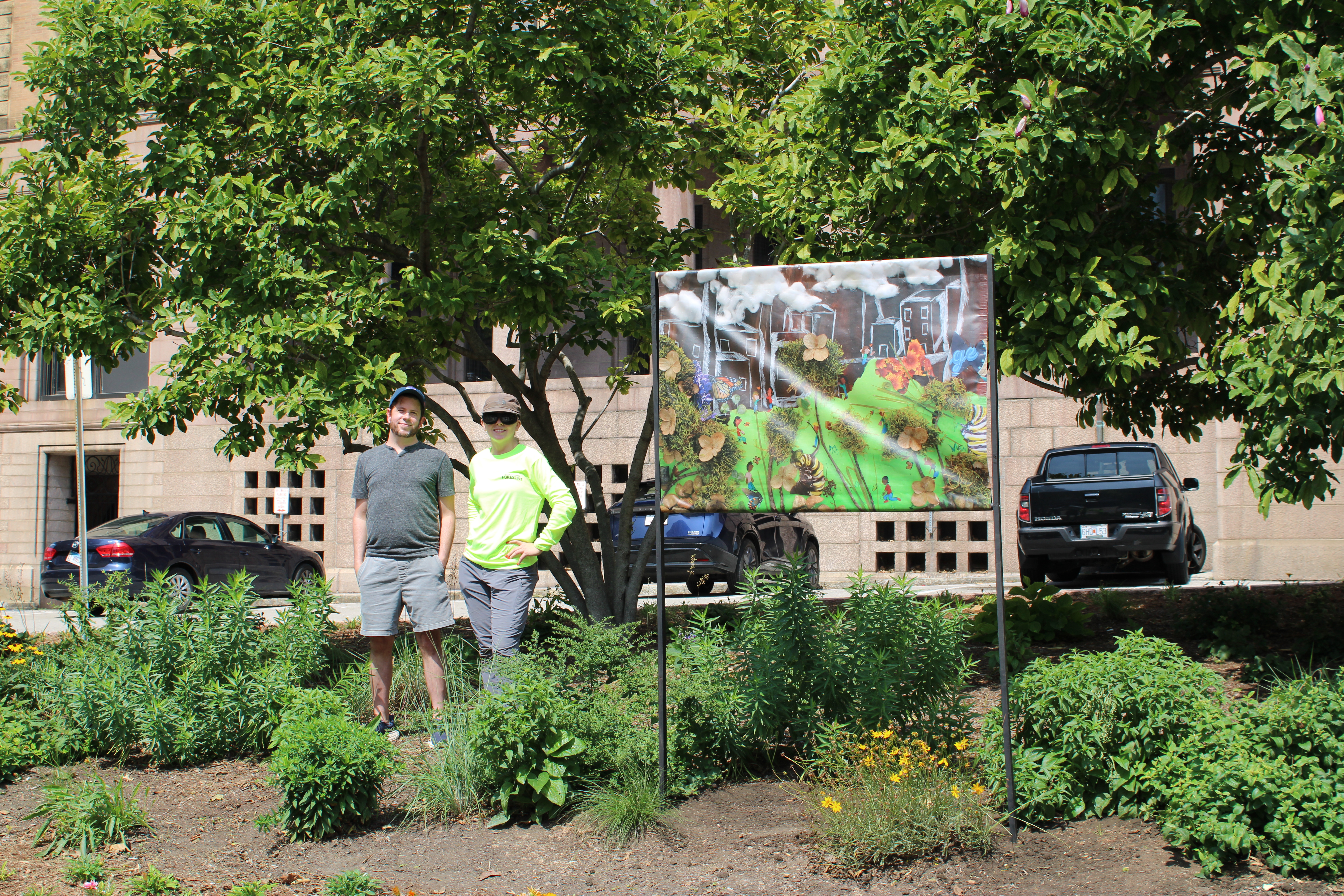
Anderson and Dasenbrock pose with a freshly mounted mural
The project is a collaboration by the City of St. Louis, the National Wildlife Federation, and Maryville University. The City of St. Louis has also been a part of the NWF’s Mayors’ Monarch Pledge since 2015, which partners with cities along the monarchs' migration path to commit to monarch conservation.
The City of St. Louis also launched Milkweeds for Monarchs in 2014, a program designed to establish more monarch gardens in the area with a goal of 200 gardens. The program was very successful, with the City of St. Louis now home to 438 monarch gardens. Monarch Gardens can be created using the suggested STL Monarch Mix and registered at any time to be displayed on the Milkweeds for Monarchs Butterfly Map.
About the Community Development Administration (CDA):
Established in 1974, CDA invests approximately $25 million each year in affordable housing, community development, and public services across St. Louis. As the City’s housing and community development agency, CDA works in partnership with HUD, the Planning and Urban Design Agency and the St. Louis Development Corporation to ensure that funding priorities are transparent, competitive, and community-driven.
-
Contact Information:
Tom Nagel
Public Information Officer II -
Department:
Community Development Administration
-
Topic:
Most Read News
- Dr. Faisal Khan Named St. Louis City Health Director Renowned public health expert brings over 25 years of public health leadership to the City
- City of St. Louis Approves Permit for Data Center Project, Announces Significant Conditions and Community Benefit Framework This approval comes with a significant number of required conditions to address concerns raised by the community, including noise, walkability, sustainability and the use of power and water.
- City of St. Louis Secures Critical New FEMA Disaster Case Management Funding for Tornado Recovery Recent visit to Washington D.C. results in increased federal, state & local cooperation.
Help Us Improve This Page
Did you notice an error? Is there information that you expected to find on this page, but didn't? Let us know below, and we'll work on it.
Feedback is anonymous.


