 GOV
Opening Doors to Stable Housing with Doorways
Providing housing and supportive services for people affected by HIV, Doorways is making waves in holistic care.


By Aubree Herzog, Washington University Gephardt Institute for Civic and Community Engagement, 2026 St. Louis Fellow
Founded in 1988 by faith leaders from different religious groups and organizations alongside civic leaders united to form DOORWAYS to allow residents of St. Louis living with AIDS to die with dignity. It originated as a compassionate hospice care, but has shifted to a housing focus, rebuilding lives with advancements in medicine.
Originating at the Cooper House, a 125 year-old orphanage in the West End, Doorways provides care to 36 residents there with 24-hour nursing support and assistance. This location focuses on reversing the effects of untreated HIV through nutrition, medication management, and care coordination with medical providers. Cooper House is the only medical care facility that Doorways owns and operates. It’s a residential care facility by licensor, but also serves as their hospice.
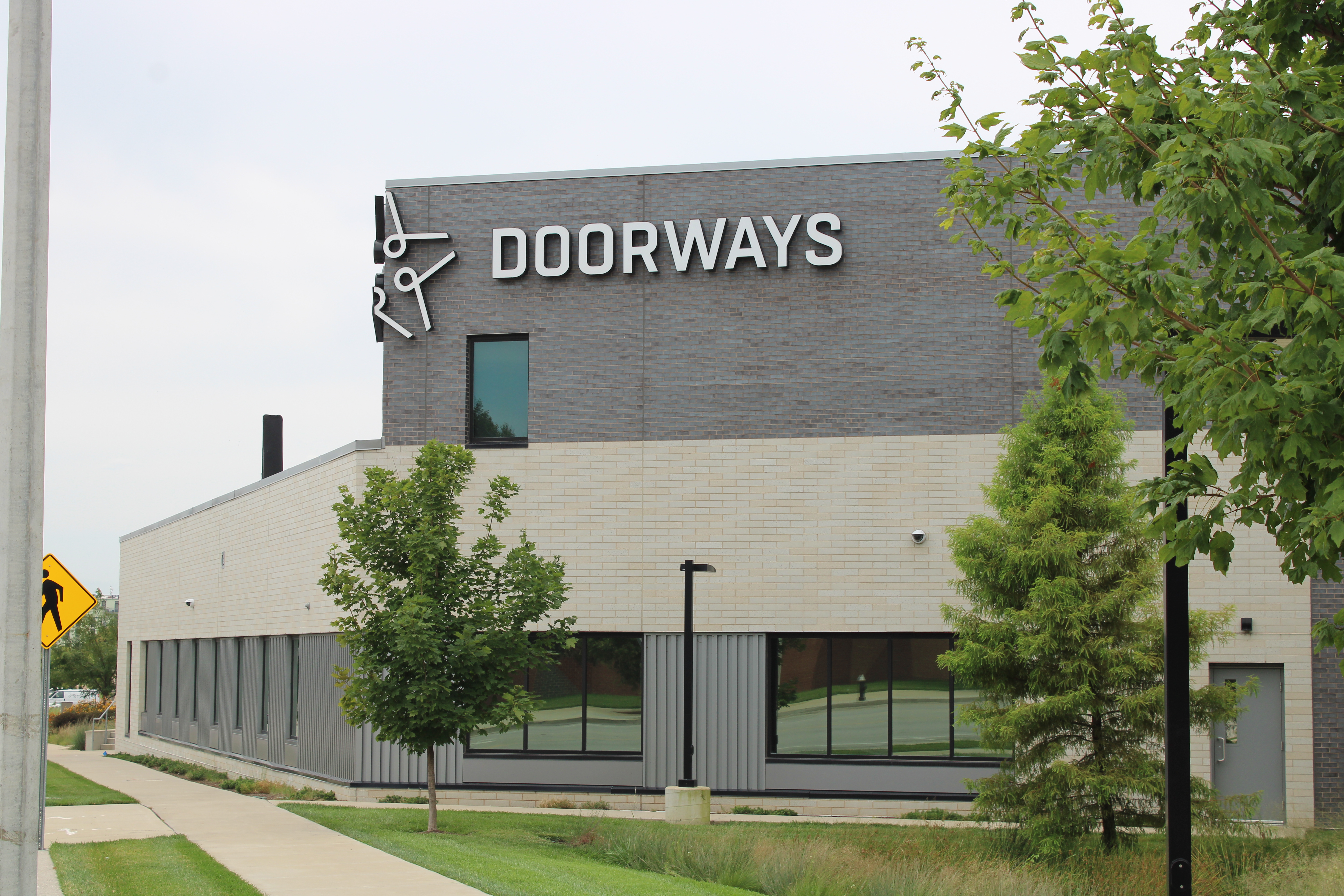
Exterior of newly finished building on Jefferson Avenue
In October 2022, Doorways opened their Jefferson Avenue campus, opening housing complexes and more services. The Jefferson campus is also home to their headquarters offices. The need for the new facility stemmed from the amount of emergency housing Doorways was providing. Opal Jones, President and CEO realized that the organization needed to expand and provide more housing, programs, and services. Over the years, the organization has realized the need to address all of the social determinants of health (SDOH) factors which include nutrition, employment, and stable housing. The campus sits on 3 acres of land that was pieced together through 17 units. The acquisition cost over $1 million to secure the site.
Doorways operates six housing complexes throughout the City of St. Louis. They serve over 3,000 people every year, and usually have 85-90 people in emergency housing every night, putting people up in hotels, motels, and boarding houses. They are also a closed referral agency and they receive about 70 referrals a day for housing. This results in a waitlist for housing and treatment. However, since expanding to the Jefferson Avenue campus, Doorways has expanded their impact significantly.
One of those ways being with Boca Pharmacy. Boca is Doorway’s pharmacy partner at Cooper House. They have expertise in dealing with people who need HIV medication, as well as low income populations. They are independent of the Jefferson Avenue Campus and rent out the space. It’s a great partnership, because they are able to provide medication to residents at Doorways, and provide better access to medication and a pharmacy. The pharmacy also offers free delivery, medicine packaging, next-day pick-up, and over-the-counter items.
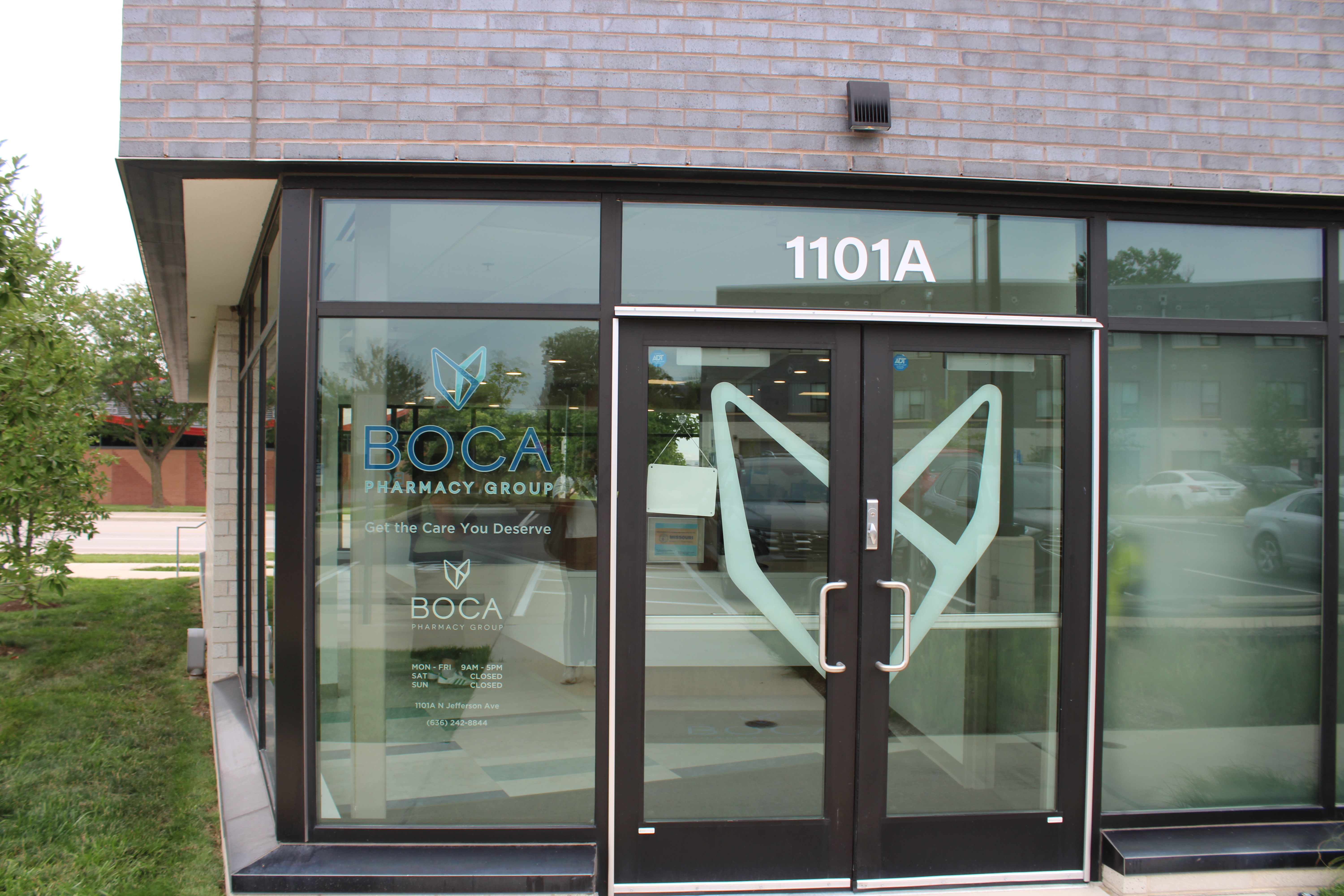
Entrance to Boca Pharmacy
The neighborhood the Jefferson Campus is located in is a pharmaceutical desert. The nearest Walgreens closed about a year ago, leaving the neighborhood stranded with no other pharmacy within 3 miles of the Boca pharmacy. This made access incredibly difficult for residents without cars, who relied on bus transportation or walking. Doorways decided to make healthcare available to the public again, opening their own clinic, open to anybody in the community.
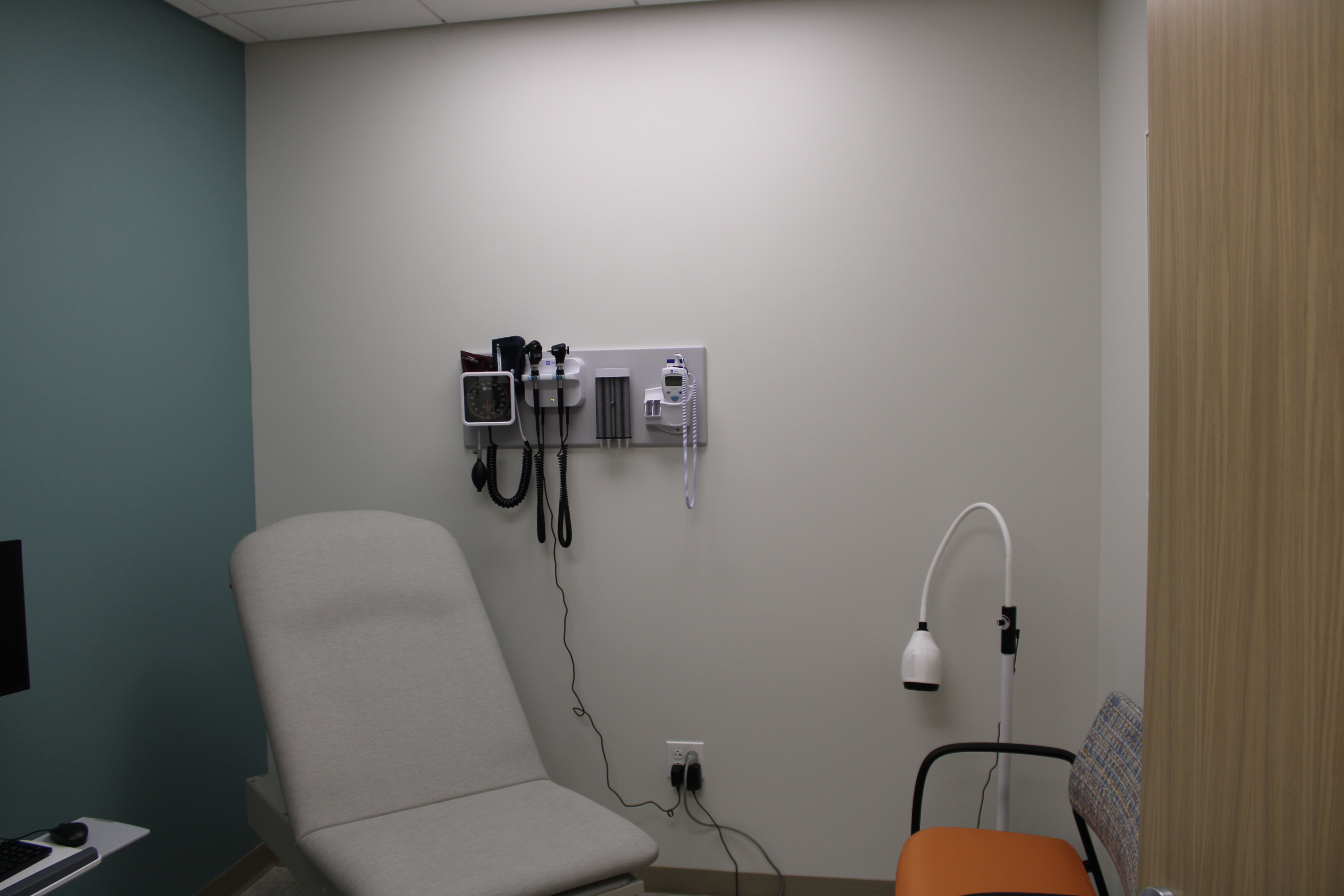
One of Boca's Two Pharmacy's Clinical Rooms
If someone comes into the clinic and tests positive, Doorways is immediately there ready to help. The pharmacy not only helps with treatment but prevention as well. It provides access to STD or STI testing, pregnancy tests, or any other care someone might need at a clinic. The prevention aspect is also important, and educating people how to have safer sex and avoid contracting HIV.
Alongside direct medical care, Doorways most importantly provides access to stable housing. There are different styles of housing that are available to clients, including transitional housing, permanent housing, residential care facilities, or housing for families. Jefferson Avenue has 50 units of fully furnished, low income, transitional housing, where residents can stay anywhere from 6 months to up to 2 years.
The transitional housing units are apartment style that have cable hook-up, free wifi, a full kitchen, a full bath, a living room, and a bedroom. There are laundry machines and computers that are available for anyone to access. Jim Timmerberg, Vice President of Advancement, commented on the move-in process saying, “We like to joke that the day you move in, you could make a cake.”
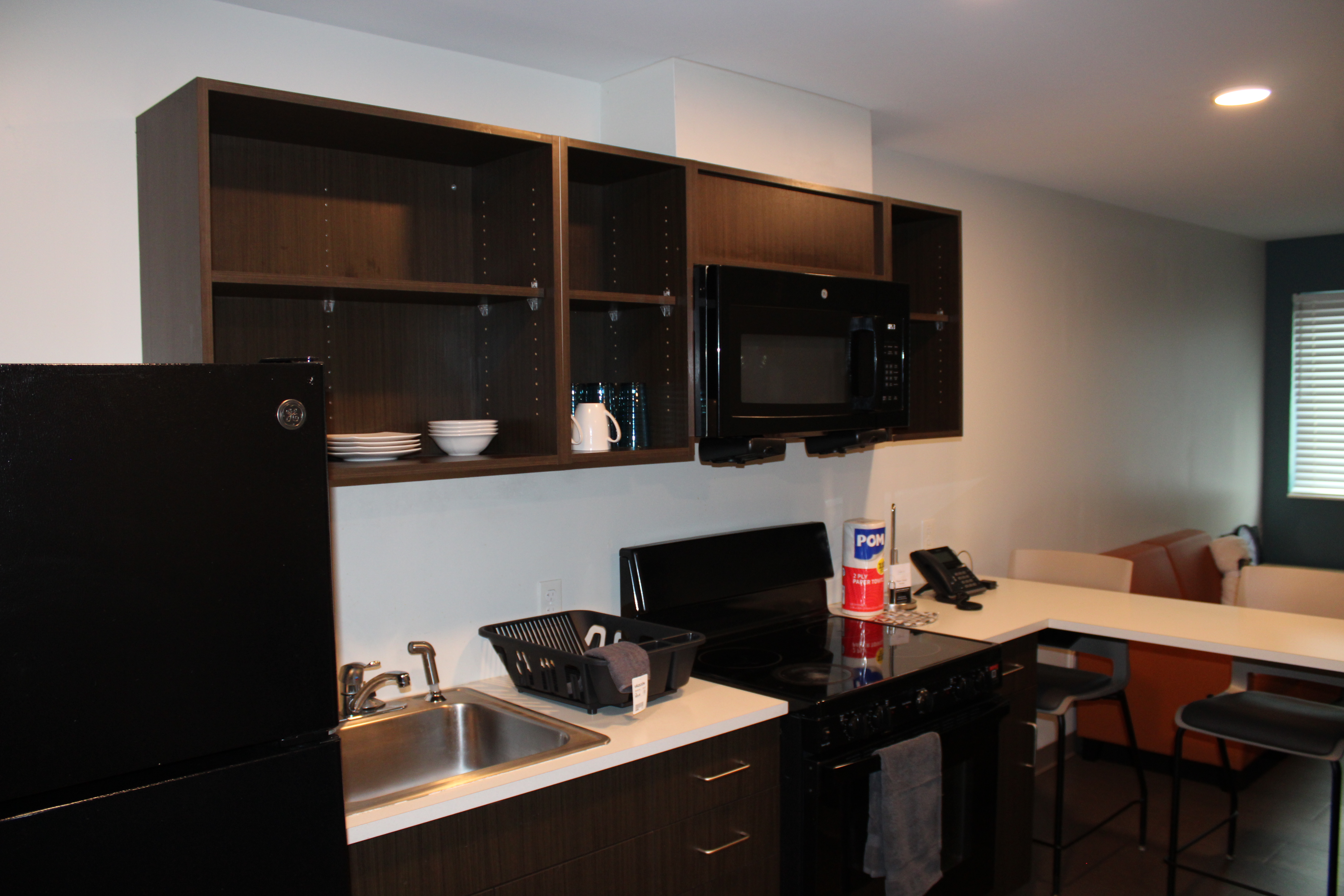
Kitchen of a Transitional Housing Apartment ready to be moved into
Another form of housing on the Jefferson campus is in Elliot Place which has 39 units of permanent housing. This housing also has an emphasis on housing individuals with advanced mental illnesses there. This housing also doesn’t have an expiration date, and it’s meant to house individuals as long as they remain good tenants.
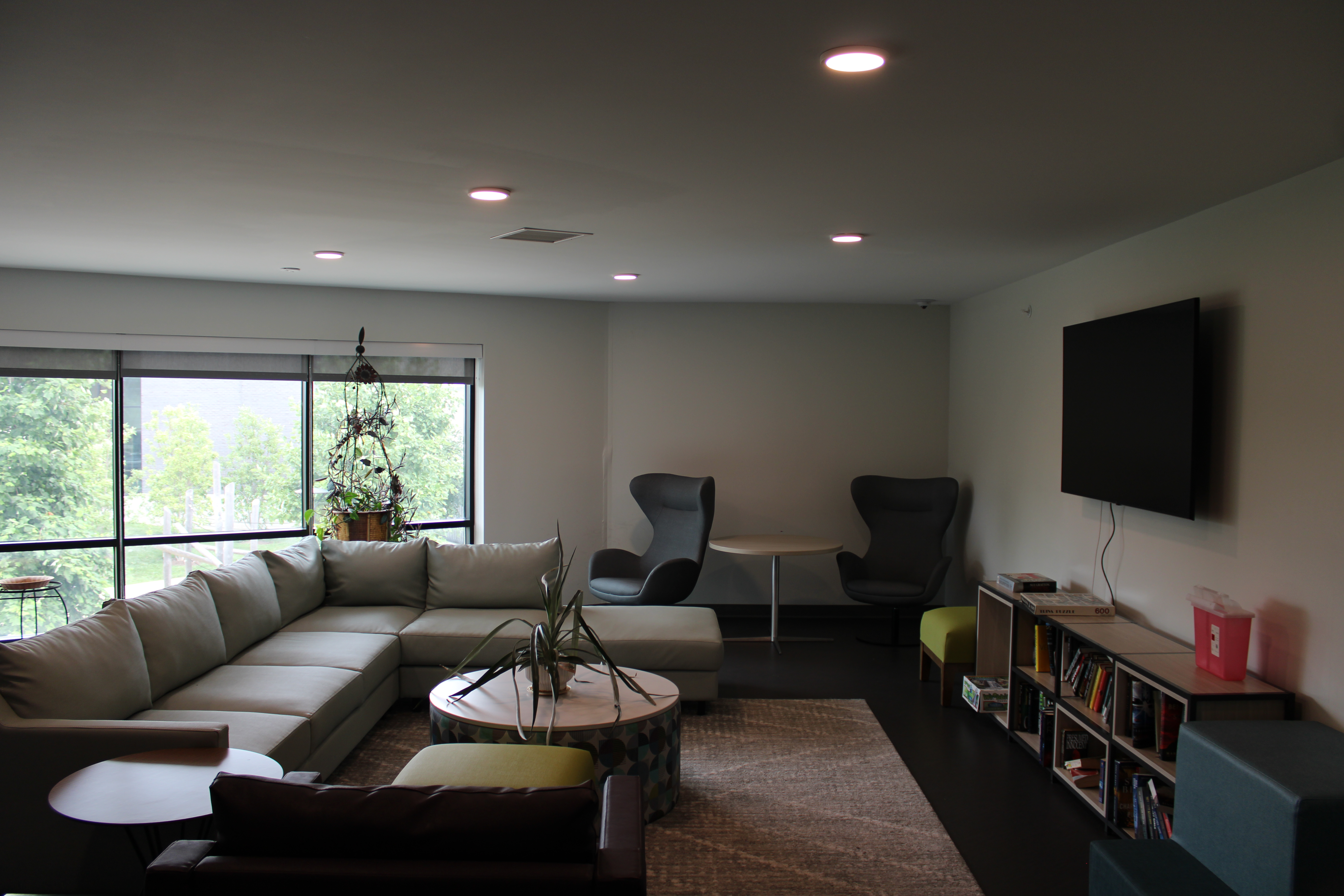
Common space in housing complex featuring a TV, couch, games, and books
Upon moving into one of their housing complexes, clients make a wellness plan. This ensures that they’re on track and attaining the goals they set, whether that’s focusing on health, employment, or another SDOH. There are also housing options that don’t require you to live in their facilities, but provide subsidies to live in other housing.
Within Doorway's holistic approach, they also provide access to food and nutrition education. Residents sign up with Food Outreach to get monthly food deliveries. There’s also a pantry in the transitional housing facility that residents receive “dots” that they can spend in the pantry. They receive 15 dots a month, which helps build budgeting skills, and provides access to fresh food, coffee, paper products, or food that isn’t available through Food Outreach. It is operated entirely by volunteers. In the case that there is an emergency placement, Food Outreach provides emergency food for that resident.
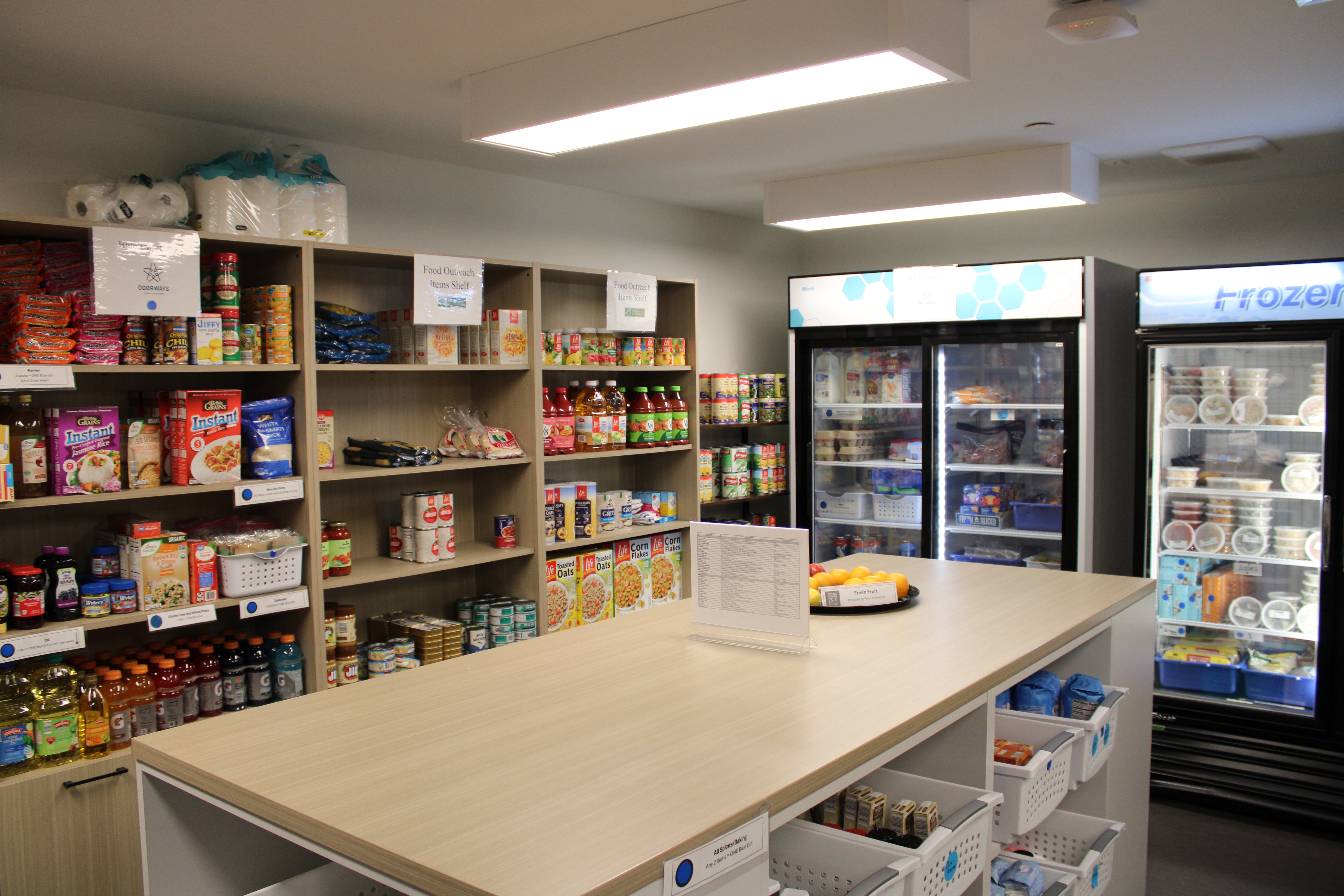
Food Pantry in Transitional Housing Complex
Another one of the services provided for residents is a cooking class with Food Outreach. They invite residents to cook and eat. This is where they make a meal together, providing the cookware, planning the menu, and giving residents the food and recipe needed to make the meal again.
There are lots of workshops and programming to ensure that residents have access to as many opportunities as possible. Whether that’s career fairs, mental health, or behavioral health programs. In the employment aspect, everyone receives a lease and an address when they move in. This helps within the process of getting a job and other aspects, because they have their own P.O. Box and proof of residency. Residents pay 30% of their income for rent to hold them accountable and ready for when they move out and have to pay their own leases.
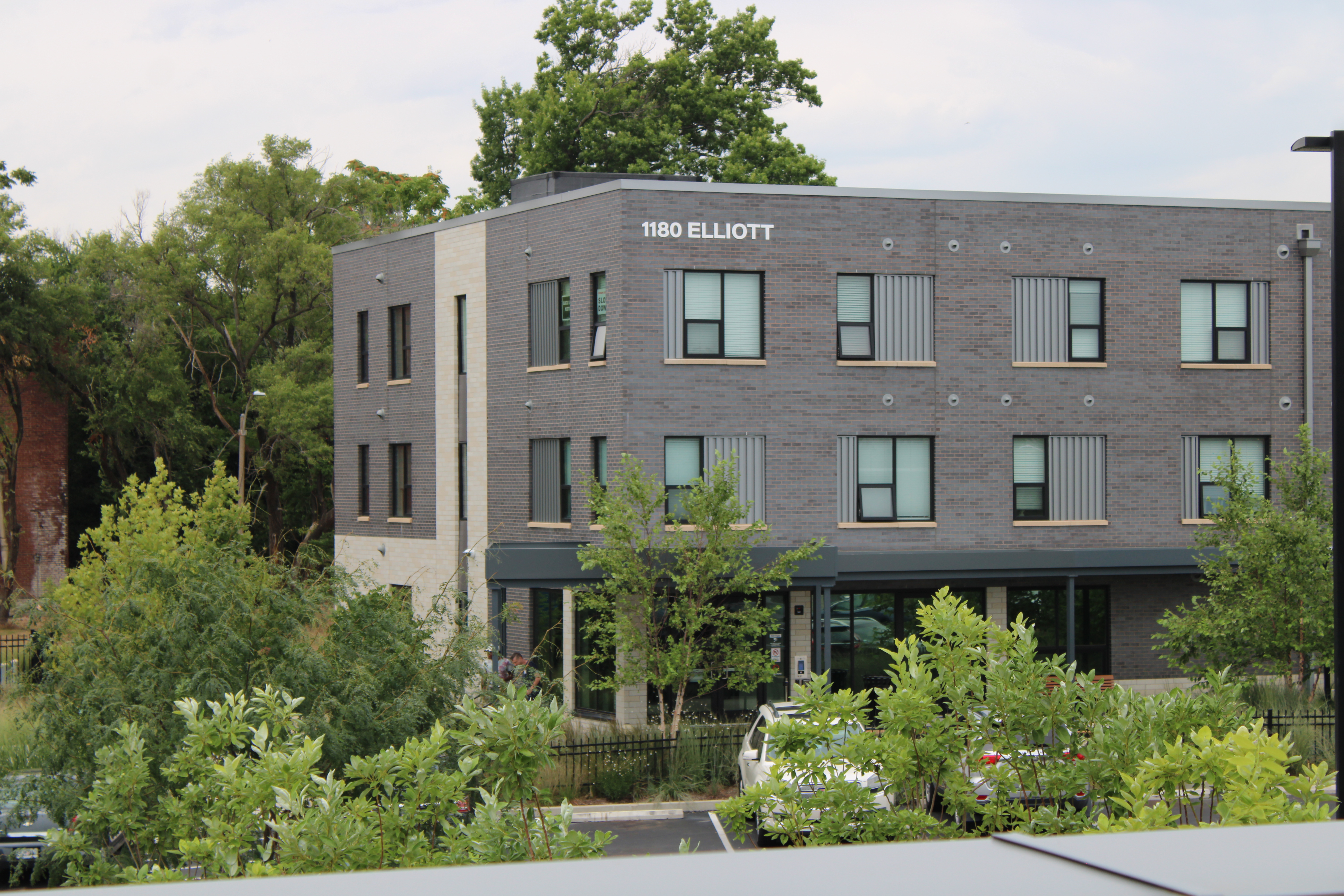
Exterior of Elliot Building which is home to permanent housing
Timmerberg acknowledged the background of where their clients are coming from, “So the three things that we found are really keeping our people homeless, or at the risk of homelessness, was, mental health, undiagnosed and untreated, substance abuse disorder, and a lack of job experience. So, a lot of times, the folks we serve now, are people that have fallen through every other thing, and have not been able to operate well in another program. We aim to provide trauma informed care.”
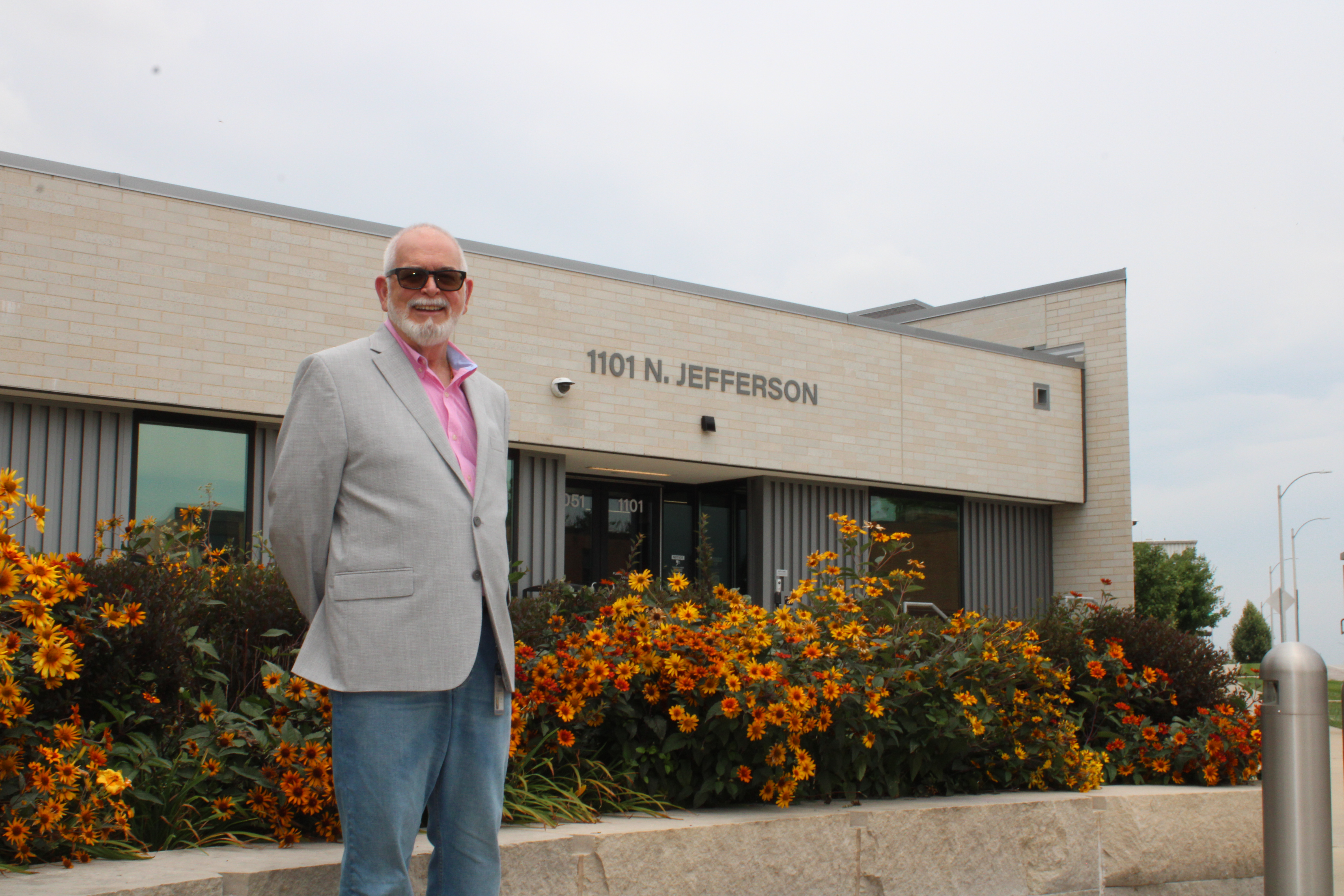
Jim Timmerberg, standing in front of the main building on the Jefferson Avenue Campus
Doorways certainly does that, meeting people where they’re at and helping them in every step of the process of getting back on their feet. The services they provide, look after clients in any stage of their life. One of Doorways’ major goals is to return dignity and privacy to clients, while fighting the stigma surrounding HIV and AIDs. While it’s not as much of a hot ticket as it used to be, HIV is affecting the lives of St. Louisans everyday and Doorways hopes to reduce its impact.
A quote that is seen consistently around the facility is from Leo Buscagli, “Too often we underestimate the power of a touch, a smile, a kind word, a listening ear, an honest compliment, or the smallest act of caring, all of which have the potential to turn a life around.” This definitely speaks true to their mission.
About the Community Development Administration (CDA):
Established in 1974, CDA invests approximately $25 million each year in affordable housing, community development, and public services across St. Louis. As the City’s housing and community development agency, CDA works in partnership with HUD, the Planning and Urban Design Agency and the St. Louis Development Corporation to ensure that funding priorities are transparent, competitive, and community-driven.
-
Contact Information:
Tom Nagel
Public Information Officer II -
Department:
Community Development Administration
-
Topic:
Housing
Community Facilities
Health
Related Stories
Help Us Improve This Page
Did you notice an error? Is there information that you expected to find on this page, but didn't? Let us know below, and we'll work on it.
Feedback is anonymous.


