 GOV
Inside Peter and Paul’s Path to Long-term Stability
How Peter and Paul Community Services Turned a Former Nursing Facility into a Home for Hundreds.


By Akima Garner, Washington University Gephardt Institute for Civic and Community Engagement 2026 St. Louis Fellow
Peter and Paul Community Services has made a mission to move St. Louis residents out of homelessness and into stability. Offering shelter, medical care, and long-term housing support to people navigating uncertainty and crisis.
What began as a small basement shelter has grown into something much bigger. Expansion was not an easy task. However, according to Chief Operating Officer Amanda Laumeyer, when looking for the best building for this growth, this former nursing home on North Florissant Avenue felt like a golden ticket. With roughly 180,000 square feet and an occupancy permit for 380 people, Peter and Paul Community Campus now houses an average of 220 to 230 people every night, guided by their values of compassion, curiosity, courage, and collaboration.
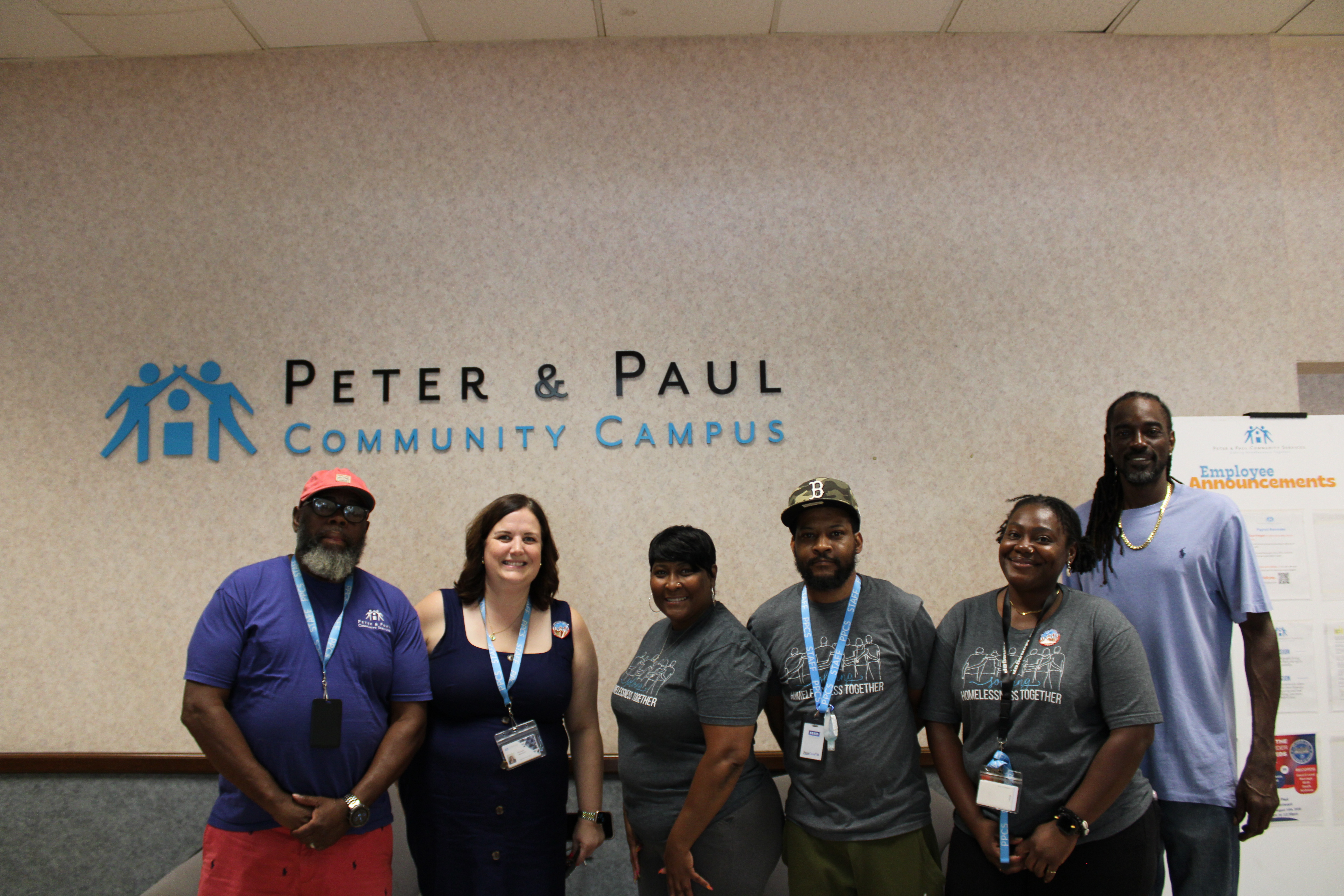
Leading staff at Peter and Paul Community Campus
Building a Campus, Not Just a Shelter
Today, the eight-story building operates as a full community campus, housing well over 200 people every night. Seven of the eight floors are used for living space, with 8 to 18 rooms per floor, most offering one-bedroom or studio units with full kitchens. Where kitchens aren't available in individual rooms, residents share a communal kitchen. A dining hall serves breakfast, lunch, and dinner every day of the week to everyone in the building.
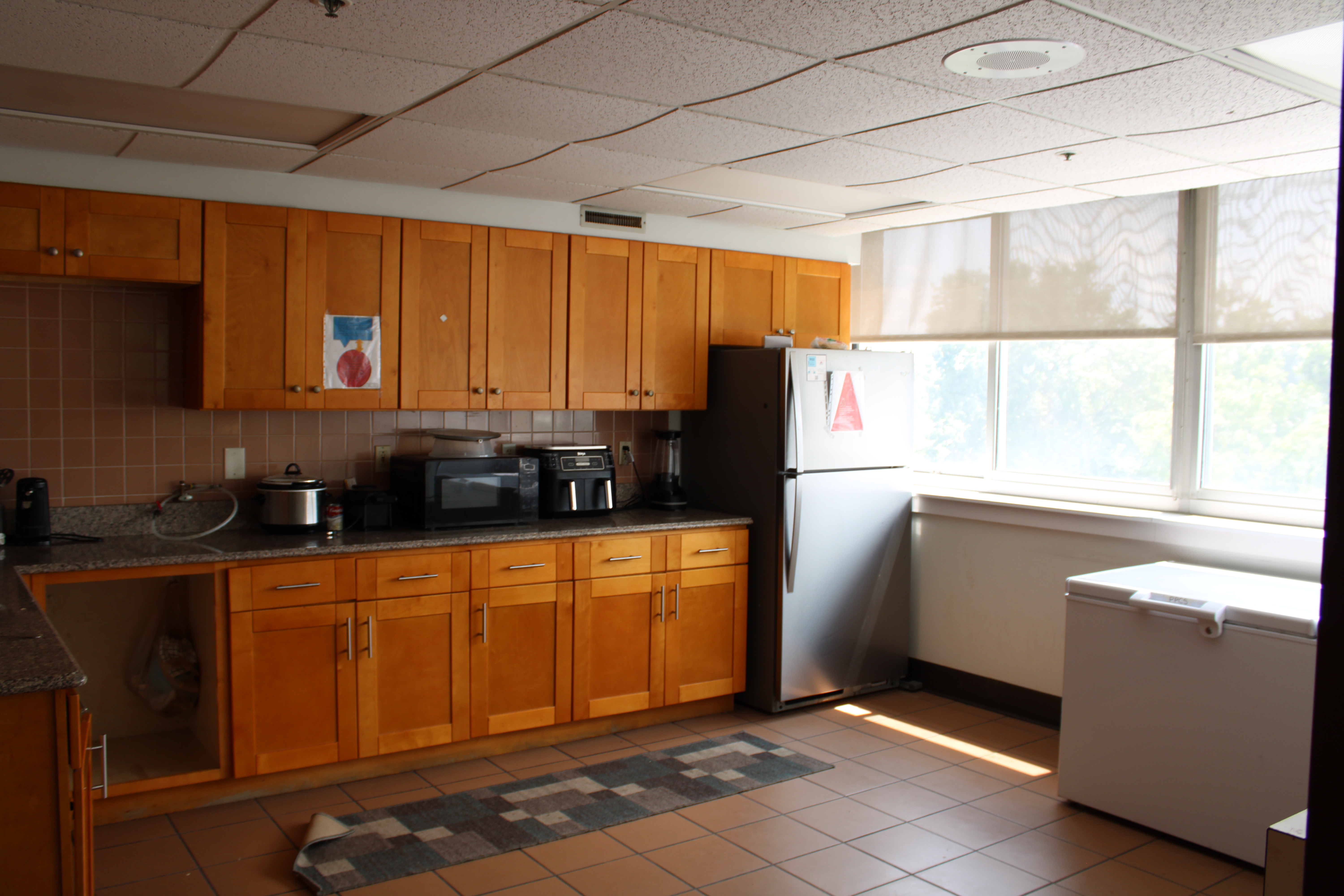
Spacious communal kitchen for residents.
The campus includes an auditorium used for programming and as a warming and cooling center, along with laundry facilities, showers, and a large lounge area. Medical care is available on-site through a partner clinic open two days a week, staffed by family nurse practitioners and offering help with medication access.
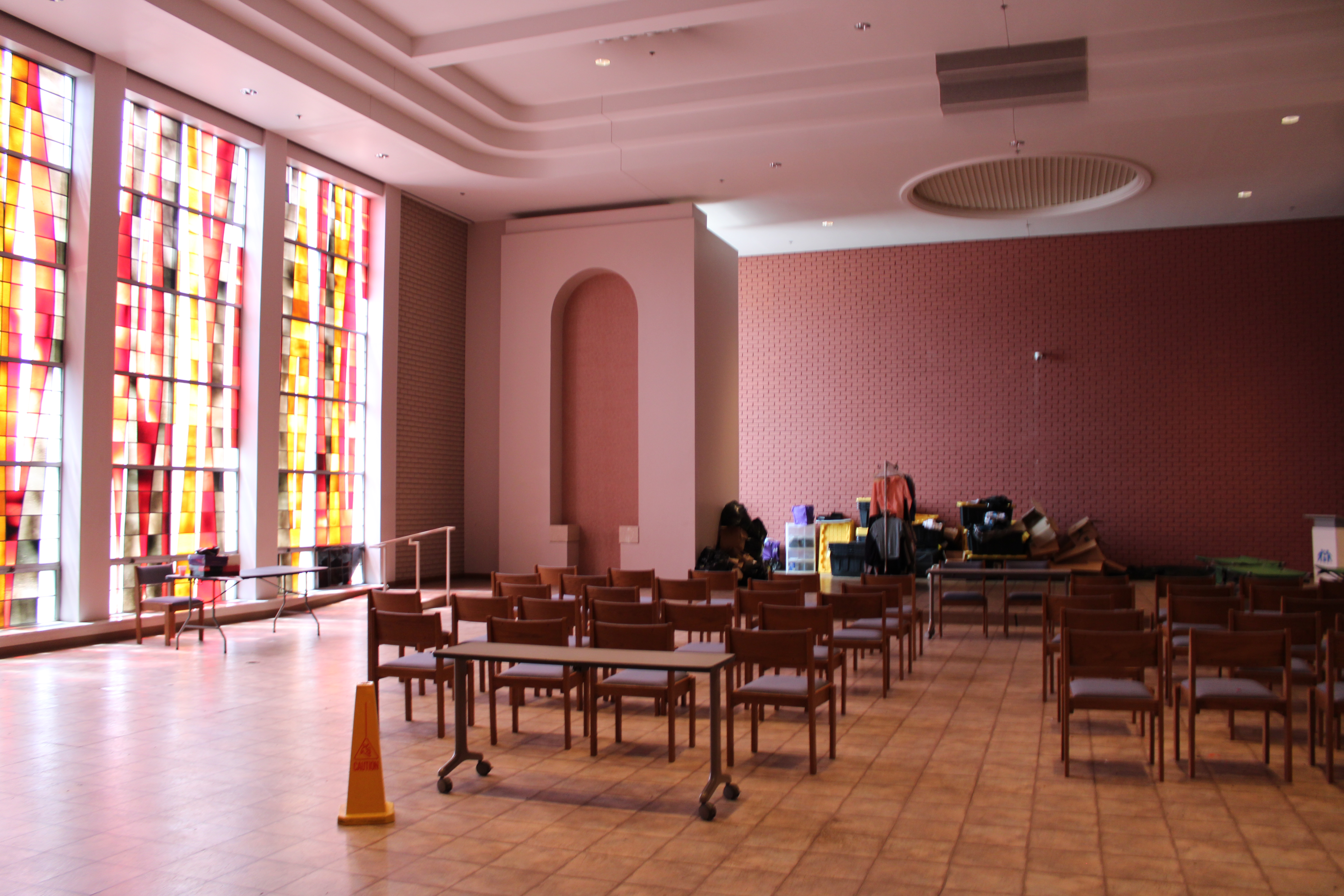
Auditorium on Peter and Paul Community Campus
The building's notable floor of emergency shelter sleeps roughly 50 pods with lockers and outlets for residents, stays nearly full at all times, with stays averaging three months and capped at six..
Laumeyer also explained that the third floor operates as an emergency shelter program in partnership with Doorways. The fourth floor, Positive Directions, serves men and women who are HIV positive and experiencing homelessness. Other floors house partnerships with Gateway 180 and the Developmental Disability Resource Center, serving both families and individuals, as well as Horizon Housing. The seventh floor operates through coordinated entry, drawing from the city's housing priority list for people who have often waited months or years for a placement. The newest addition, a respite program in partnership with 3 Steps to Home, serves people with medical needs who are homeless and ready for discharge from the hospital but have nowhere else to go, offering 24/7 nursing support.
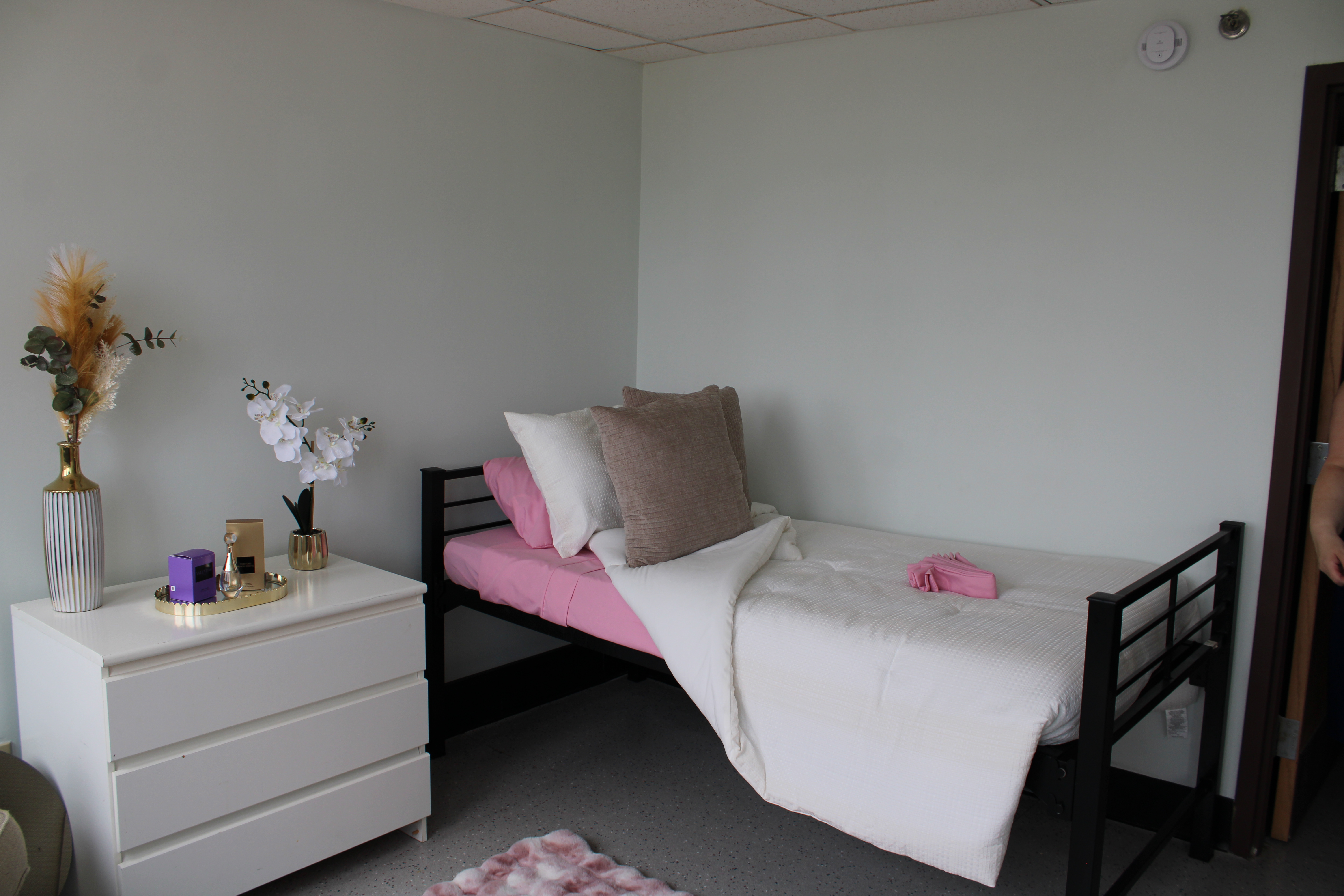
Demonstration of rooming on Peter and Paul Community Campus
Referrals to the building come through several channels, most commonly the 211 or Get Help system, which lets shelters across the city see real-time bed availability and hold spots for people in need. Partner programs each have their own referral process, whether through the Department of Mental Health, the Ryan White program, or direct hospital referrals for the respite program.
These partnerships also generate revenue that helps sustain the building. Partner organizations sign leases and pay rent, with Peter and Paul acting as landlord. Laumeyer explained that Peter and Paul are not making money off this, but it's helped them a lot with the repairs, the overhead, meals, and the housekeeping and maintenance staff.
Valuing Compassion, Curiosity, Courage, and Collaboration
The Community Development Administration’s (CDA) funding has played a direct role in making this work possible, according to Laumeyer. The organization’s new shelter space is CDA-funded, and this is also the first year CDA has supported Peter and Paul operations directly. Peter and Paul have been awarded $900,000 from the CDA to fully reconstruct an on-site convent. Laumeyer expressed, "I think being able to kind of back us up with that funding allows us to be more courageous and creative." "Everybody that comes through shelter, they're going through a crisis. There's just really high need, and we couldn't support that without those CDA funds."
Those four values, the organization's core values, show up throughout the campus, from the partnerships that fill each floor to the way staff describe their long-term goals. Staff describe their broader vision in terms of the well-known local landmark: "We kind of want to be like the Delmar Divine, but for homeless services." It's a vision rooted in the same values that carried the organization through years of searching for a home, now made real one floor, one partnership, and one resident at a time.
-
Department:
Community Development Administration
-
Topic:
Construction, Maintenance, and Improvements
Beautification and Nuisance Reduction
Related Stories
Help Us Improve This Page
Did you notice an error? Is there information that you expected to find on this page, but didn't? Let us know below, and we'll work on it.
Feedback is anonymous.


