 GOV
GOV
Jubilee CDC Builds a Path to Recovery in North St. Louis
With CDA support, Jubilee Community Development Corporation is transforming the once vacant Eliot School into a recovery campus.


By Akima Garner, Washington University Gephardt Institute for Civic and Community Engagement 2026 St. Louis Fellow
Built in 1898 and vacant since 2004, the Eliot School building, named for William Greenleaf Elliot, one of the founders of Washington University, sits next door to Jubilee Community Church. After more than 80 years of use as a school and two decades sitting empty, the building is being reimagined by Jubilee Community Development Corporation, an arm of the church, as the Jubilee Wellness Center. The center will serve as a recovery campus offering treatment, housing, and a path to stability.
Administrative Pastor Andrew “Andy” Krumsieg calls it the largest private project along the Grand corridor north of Delmar in more than 80 years.
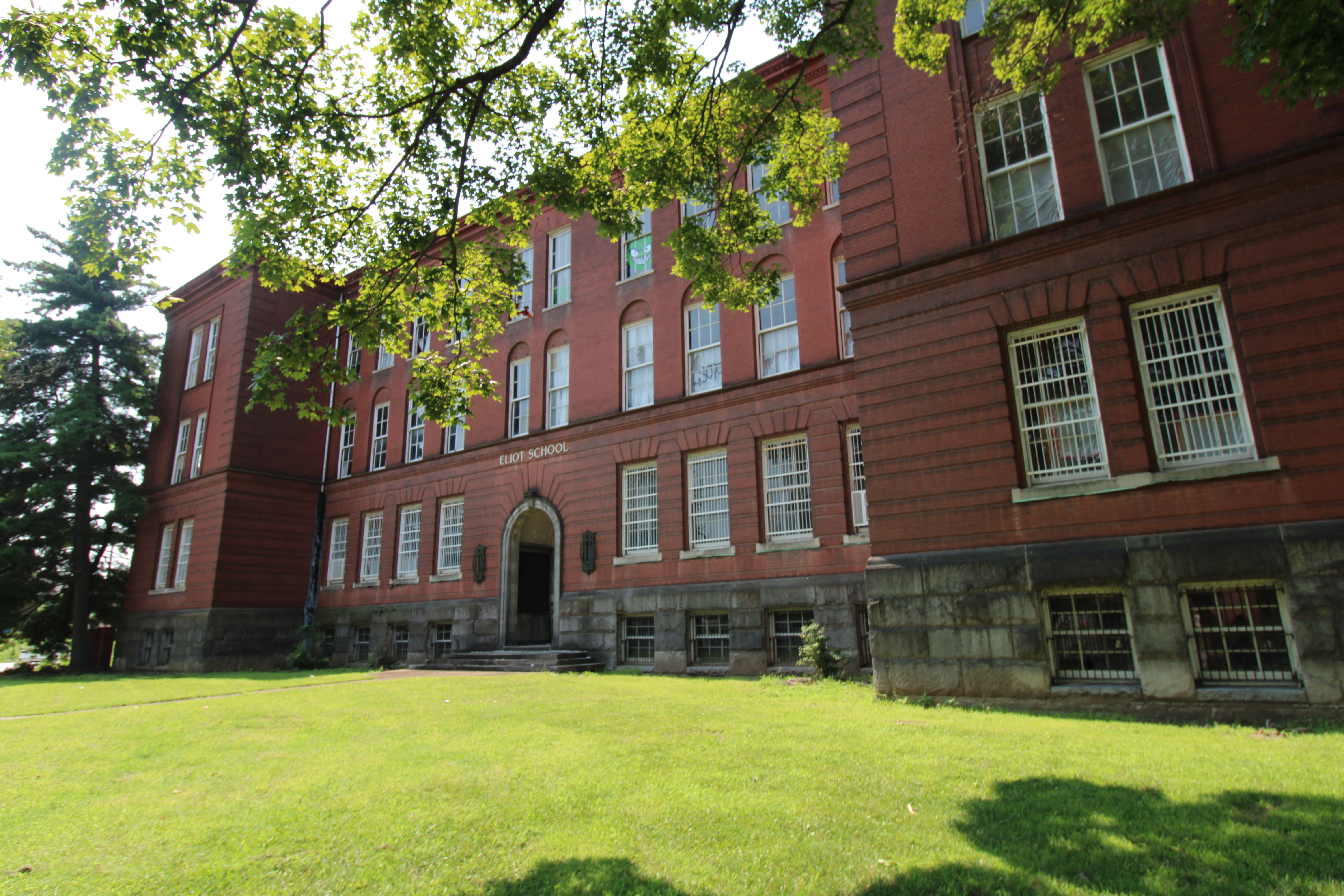
Outside front view of entrance of vacant Eliot Elementary School.
A Neighborhood in Need
Krumsieg moved back to the College Hill neighborhood more than 30 years ago after growing up nearby and now lives just four blocks from the Eliot School site, which sits about a block from Jubilee Community Church itself. That proximity, he says, makes this a true community-driven project.
He then explained the toll that addiction, mental illness, and homelessness have taken on the blocks surrounding the church.
“On any given day”, Krumsieg estimates, “the vast majority of people who pass by the building are struggling with one of those three issues.”
“All three are distinct, but they're deeply correlated. And for many people in the area, they intersect," Krumsieg further explained.
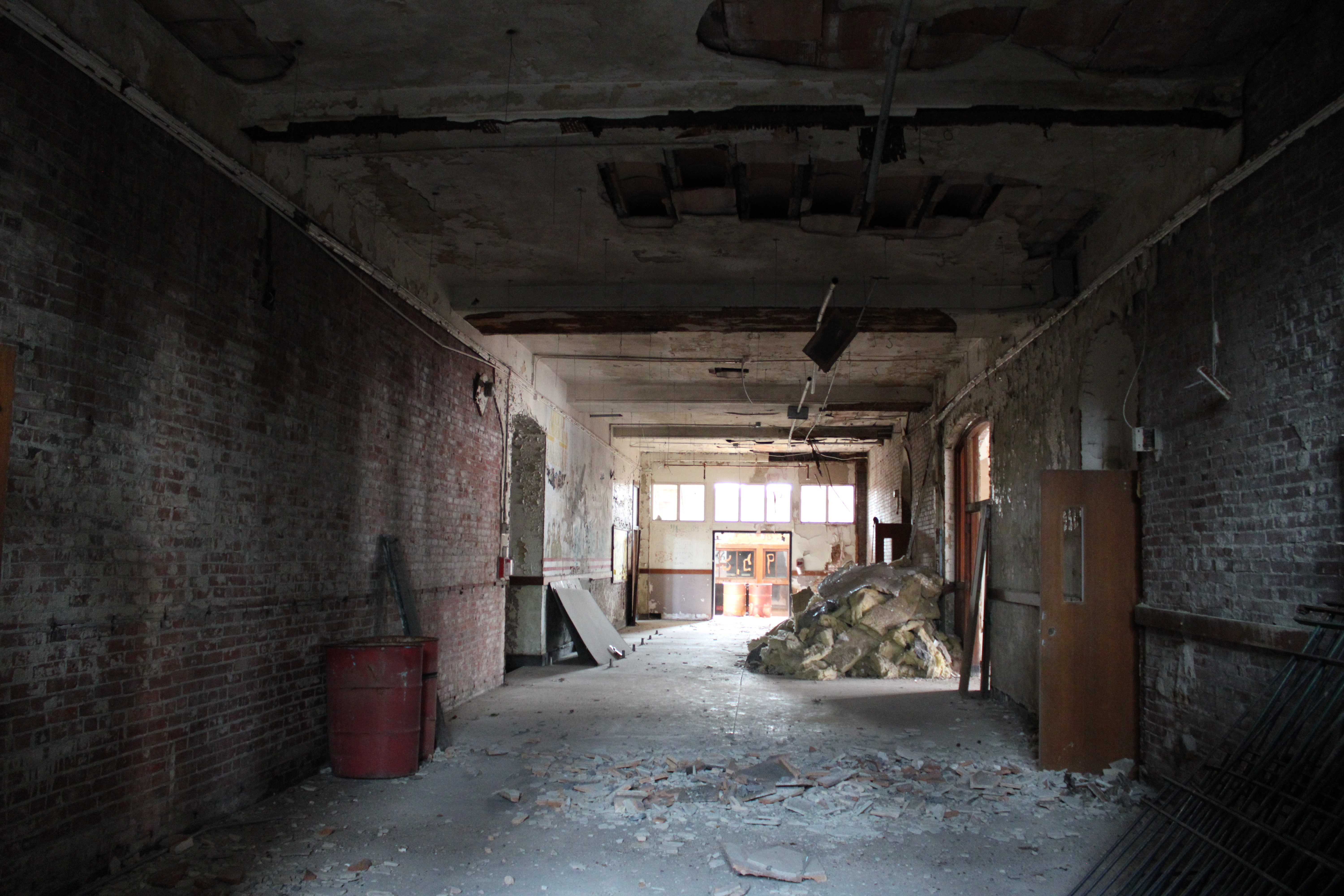
Inside view of hallway on first floor of Eliot Elementary School.
Overcoming Obstacles
The Jubilee Wellness Center will be the first phase of a much larger vision. Jubilee's development team includes a co-developer, a general contractor, tax attorneys, an architecture firm, and a longtime consultant who has been with the project since its earliest days. The organization has also secured Recovery Support Services (RSS) certification through the State of Missouri, along with ARCH and national CARF accreditation, which, according to Krumsieg, signals that the program meets rigorous standards of care.
The ground floor will include an entrance and reception area, program space, and a gymnasium. The building's twelve former classrooms will become residential rooms, each housing about eight men during the first 90 to 180 days of recovery, which is a critical window Krumsieg describes as the time when residents "get their heads on" and begin putting their lives back together. The program will serve men specifically; Jubilee partners with other organizations to provide housing for women and children.
Krumsieg says Jubilee chose the Eliot School site for two reasons: its proximity to the church, and the building's structural integrity. The team is preserving and repurposing original elements wherever possible, including the terrazzo and maple flooring and the roughly one-inch-thick terracotta roofing. Alongside that historical preservation, the building will get entirely new plumbing, electrical, windows, and HVAC systems, along with energy-efficient upgrades throughout, and will be fully handicapped accessible.
The project was originally anticipated to be complete in 2025. According to Krumsieg, construction is now expected to begin in the first quarter of 2027, with completion by summer 2028.
Krumsieg attributes the delay to the realities of predevelopment: zoning, guidance review, and the permitting process, none of which come with a simple checklist. Throughout that process, he says, the Community Development Administration (CDA) has been an exceptional partner. Helping Jubilee navigate compliance requirements and served as a consistent advocate for the project.
CDA’s support has also been financial. In December 2024, CDA awarded Jubilee Wellness Center $4.8 million toward the $34 million project. Krumsieg calls this funding a real anchor for the work. Some funding is still being finalized, and Jubilee is pursuing a combination of bridge loans, gap financing, and community support to close the remaining gap.
CDA's early and ongoing involvement, he says, “has been instrumental in moving the project forward and helping Jubilee build the case for additional donor support.”
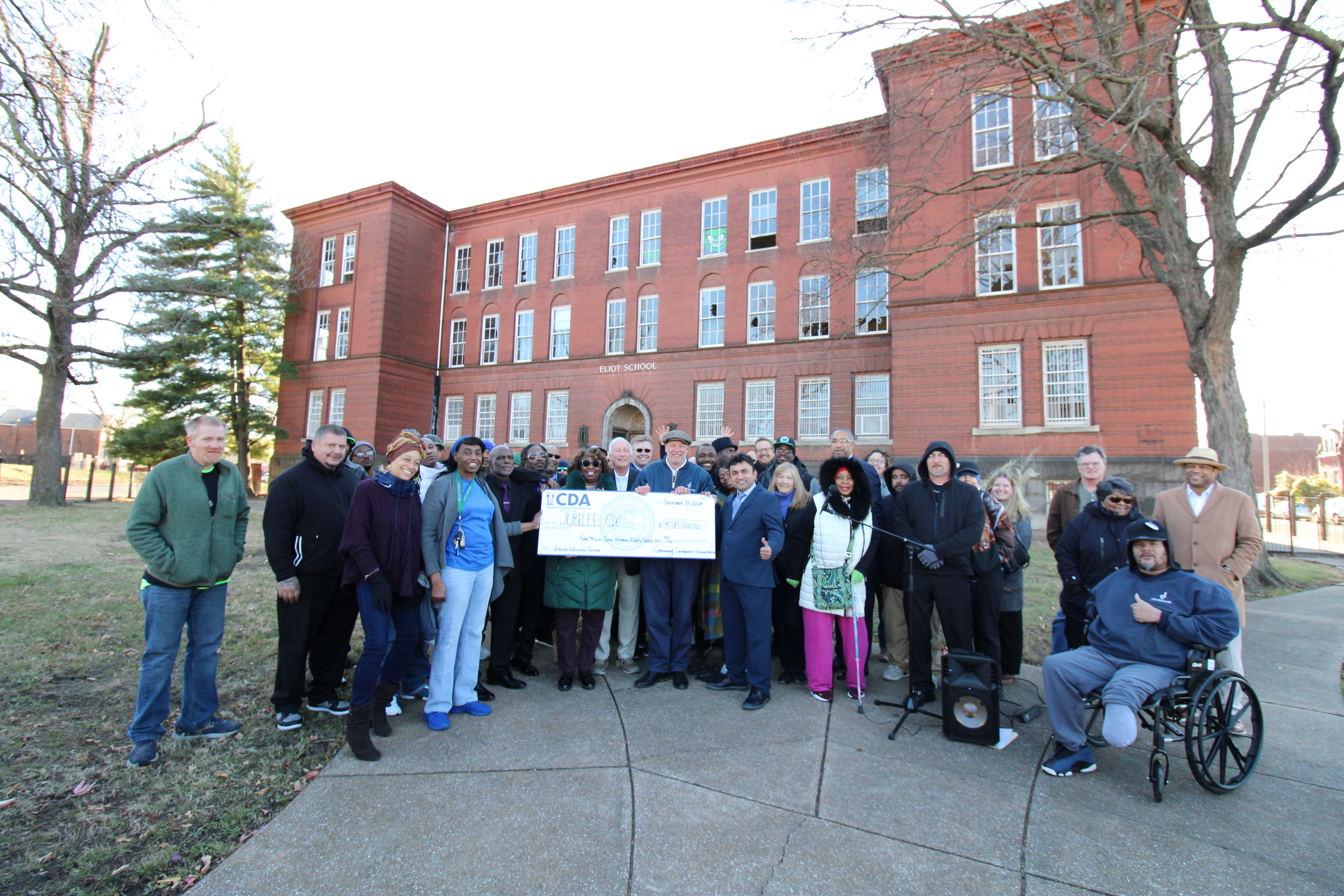
Stakeholders outside front entrance of vacant Eliot Elementary School with CDA check.
Looking Ahead
Despite the delay, Jubilee remains confident the project will find the support it needs. Krumsieg points out that few families in St. Louis have gone untouched by addiction, mental illness, or homelessness. When asked how the neighborhood has responded to the plan, Krumsieg said there's been little to no hesitation.
“People are dying on our streets. Why can't we help them? This would be a great place to help," he further resonated.
-
Contact Information:
Tom Nagel
Public Information Officer II -
Department:
Community Development Administration
-
Topic:
Beautification and Nuisance Reduction
Construction, Maintenance, and Improvements
Related Stories
Help Us Improve This Page
Did you notice an error? Is there information that you expected to find on this page, but didn't? Let us know below, and we'll work on it.
Feedback is anonymous.


