 GOV
GOV
Building a City for Everyone: A Conversation with Commissioner David Newburger
An interview with Commissioner Newburger
Overview
For decades, David Newburger has been at the forefront of expanding accessibility, independent living, and equal opportunity across St. Louis. As Commissioner of the City’s Office on the Disabled and a co-founder of the Starkloff Disability Institute, Newburger has helped shape municipal policy, public infrastructure, and community awareness from the ground up.
What does a typical day look like for you as the Commissioner of the Office on the Disabled?
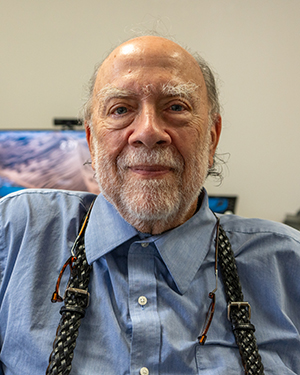 There is almost no public policy issue that doesn't touch on disability because we are talking about disabled people across an entire society.
On any given day, we might be working with a city employee who needs a job accommodation, reviewing the physical design of a sidewalk or building, or educating code officials on the technicalities of the Americans with Disabilities Act (ADA). We also tackle broader community challenges, like how snow removal affects older adults and residents with mobility limitations. From public safety to urban planning, almost everything has a disability component.
What are the most critical qualities needed to advocate for accessibility in St. Louis?
The primary hurdle the disability community faces is that people without disabilities simply don't think about these issues.
Advocacy requires seeing a problem through someone else's eyes. It comes down to empathy—asking the practical questions: How will a blind person know where the other side of the street is? How does an employee who cannot walk across a massive building in 15 minutes explain that to their manager? Effective advocacy means identifying those unconsidered barriers and helping shape solutions that work for everyone.
How does your office work with other city departments to build a more inclusive workplace?
A significant portion of our work involves guiding managers through reasonable job accommodations. We work across dozens of different disabilities, from autism to vision disabilities.
When an employee requests an accommodation, they are learning to self-advocate, and we help managers understand how flexibility functions.
We recently handled a situation where an employee needed frequent restroom access due to a medical condition, requiring flexible hours. The manager resisted simply because it broke the standard 8-to-5 routine, confusing a medical accommodation with a behavioral issue. Once managers realize that flexibility enables productivity rather than undermining it, everyone succeeds.
St. Louis is developing a comprehensive ADA Transition Plan to audit public infrastructure. What does that process look like on the ground?
When the ADA was enacted, it mandated that local governments inventory every inaccessible feature and eliminate them within two years—a timeline no city in the country could realistically meet.
In St. Louis, our transition plan serves as an active framework. With over 2,000 miles of sidewalks, spending all our resources upfront just cataloging every bad stretch means the inventory would be out of date before we finished. Instead, we target the worst barriers first while maintaining dedicated capital funds to fix issues continuously.
While we have recently been allocated around $2 million annually specifically for transition plan work, current budget constraints will reduce that figure for the 2026-27 fiscal year. Despite this tighter funding, we remain committed to eliminating physical barriers that routine maintenance or new development would not otherwise address, ensuring steady progress toward making the city measurably more accessible.
Digital equity is as crucial today as physical ramps. How is the City ensuring digital communications are fully accessible?
Digital accessibility requires constant vigilance. Fortunately, the City’s web team is deeply committed to accessibility standards, but because individual city offices often post their own content, ongoing education is necessary.
A common issue is uploading untagged PDF documents that screen readers for visually impaired residents cannot interpret. Our goal is to ensure all city documents, drawings, and digital public portals follow clear narrative standards so everyone can access vital public information.
You co-founded the Starkloff Disability Institute over 20 years ago. How does your background in community advocacy shape how you lead the Office on the Disabled today?
Early in my career as an attorney litigating ADA cases, we realized that simply taking a hostile, litigious approach didn't change mindsets. Poking people in the eye didn't build inclusive workplaces.
We shifted our strategy toward education—training employers to see the immense value disabled workers bring to an organization. That mission drives my work as Commissioner. I don't approach departments with hostility; I focus on collaborative problem-solving to ensure both the department and the employee are set up for long-term success.
Help Us Improve This Page
Did you notice an error? Is there information that you expected to find on this page, but didn't? Let us know below, and we'll work on it.
Feedback is anonymous.


